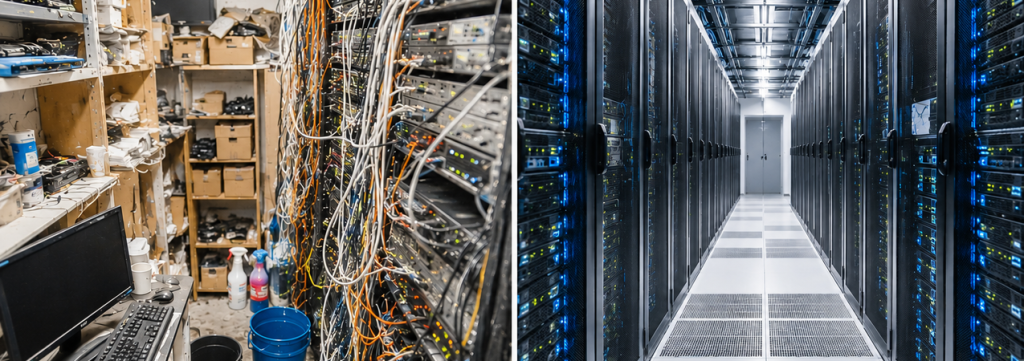
Forgotten passwords, coding mistakes, and ChatGPT: what causes most IT disruptions in companies?

A single forgotten password or a “frozen” program – and a full day of productivity is lost. When almost every company process depends on IT – from production to customer service – even the slightest glitch can stop operations entirely. And while businesses are investing more than ever in technology, there’s a paradox: most IT issues still happen because of… people.
An analysis by Altic IT, a company providing IT support services, shows that even the most advanced IT infrastructures usually fail not due to technical breakdowns but because of human errors. A growing trend also stands out – small IT problems that employees try to fix using ChatGPT often turn into much more serious disruptions.
The most common IT issue: forgotten passwords
Interestingly, most IT support requests in companies are not caused by major system failures but by simple issues – forgotten logins or locked accounts. These account for around 22% of all IT incidents.
“It could be a forgotten password, a non-functioning email, or a blocked VPN. It might seem trivial, but when an entire team can’t log in, most processes – including orders and even production – come to a stop. Then a ‘simple’ mistake becomes costly,” says Aurelijus Tutkus, Head of IT at Altic IT.
These issues are also increasing due to stricter security requirements. Most companies now use multi-factor authentication (MFA), which protects against cyber intrusions but makes logins more complex.
Programs fail more often than computers
Another frequent cause of trouble – software glitches. 19% of all incidents stem from “frozen” or slow standard programs like Microsoft Office, and another 17% are due to errors caused by updates to operating systems like Windows or MacOS, which disrupt various business applications.
“In the past, IT problems mostly meant a broken computer. Today, they’re usually software-related. It’s not the hardware that fails – it’s the applications: accounting, management, CRM, or ERP systems. Physical computer failures now make up just about 2% of all cases – showing that companies are investing in their equipment,” says Tutkus.
Companies that regularly upgrade hardware and have spare computers ready face even fewer disruptions. A non-working device today means a direct loss due to lost working hours, so having a functioning backup equipment process is recommended.
The weakest link: still humans
Tutkus also notes a growing trend of users causing IT issues themselves while trying to fix them using AI tools.
“More and more clients come to us after attempting to ‘repair’ their systems based on ChatGPT’s advice. Unfortunately, most of those cases end up creating not one, but several new problems,” the IT expert smiles.
According to incident analysis, most IT problems originate not from technology but from people – errors, rushing, or insufficient knowledge. Some click the wrong link, others enter incorrect data, and some simply forget to change their passwords on time.
“The human factor remains the biggest source of errors, but it decreases when companies invest in education. Newer technologies also get ‘smarter’ – they either prevent human error or detect and fix it faster. Moreover, many companies are now automating the handling of recurring issues and their consequences. That’s what we also recommend,” says Tutkus.
From “make it work” to “make it secure”
Over the past decade, IT priorities have changed dramatically. It used to be about “making things work.” Today, the goal is making them work securely. Managing access, logins, and data protection has become more complex as companies aim to prevent cyberattacks and comply with increasingly strict regulations such as NIS2 and ISO standards.
“IT security has gone from being a niche topic to a business-wide responsibility. It’s no longer just about restoring systems after a failure – it’s about ensuring they never stop in the first place. Most companies now have not only a plan B but also a plan C – how to recover data, minimize damage, and continue operations even after a major cyberattack,” explains Tutkus.
While IT continues to accelerate business growth and digitalize more processes, the “dark side” evolves as well – cybercriminals and the sophistication of their attacks. As a result, companies must now protect a much larger number of systems from increasingly complex threats.
How to avoid IT troubles? Focus less on firefighting
The scale and damage of IT problems can be significantly reduced by focusing not on firefighting, but on prevention. Continuous monitoring, infrastructure maintenance, and regular system analysis help identify the root causes of issues before they turn into major incidents.
“That’s why we recommend constantly identifying recurring IT problems and addressing their root causes, not just the consequences. In general, IT support in companies increasingly resembles car servicing – with regular check-ups, updates, and testing. Businesses that take care of their IT systems on time save both money and time,” says Tutkus.